
In a world where attention is the most valuable currency, digital marketing is not just “advertising on the internet”. It is a complex ecosystem of data, psychology and technology. From the small start-up to the global brand, everyone is fighting for the click, the lead and the sale. But what actually lies behind the term?
Definition and essence
In its purest form, digital marketing covers all marketing efforts that use an electronic device or the internet. Businesses use digital channels such as search engines, social media, email and other websites to connect with current and potential customers.
Unlike traditional marketing (billboards, TV, newspapers), digital marketing allows two-way communication and, most importantly, precise measurement of results in real time. If you run a business today, whether you offer services or products, quality digital marketing services (see also how much a website costs) are the difference between growth and stagnation.

Core components and channels
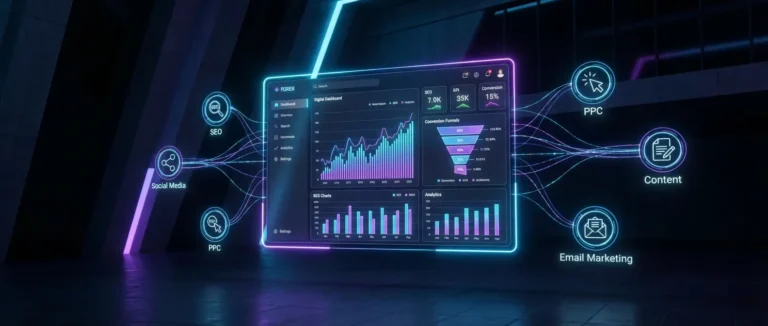
Digital marketing is a huge umbrella covering many disciplines. These are the foundations no modern strategy can do without:
1. SEO (Search Engine Optimisation)
This is the process of optimising your website so that it ranks higher on search engine results pages (SERPs), which increases the amount of free (organic) traffic. Professional SEO includes a technical audit, creating quality content and building authority through links.
2. Content Marketing
Creating and promoting content to build brand awareness, grow traffic and win customers. This includes blog articles (like the one you are reading), e-books, videos and podcasts. Content is the fuel for every other channel.
3. Social Media Marketing (SMM)
Using platforms such as Facebook, Instagram, LinkedIn and TikTok to promote the brand. It is not just posting photos but strategically building a community and engagement.
4. PPC (Pay-Per-Click)
An advertising model in which you pay a fee every time someone clicks on your ad. The most popular form is Google Ads, but social networks also offer powerful paid advertising tools.
Data-driven strategy
The biggest advantage of digital marketing is trackability. With tools such as Google Analytics 4, we know exactly who visits the site, how long they stay and what they buy.
With our SEO audit service, for example, we do not guess. We analyse technical metrics to find exactly where you are losing users. Here is a simple example of conversion tracking in your site's code:
// Example: sending a "Purchase" event to Google Analytics 4
gtag('event', 'purchase', {
  transaction_id: 'T_12345',
  value: 25.42,
  currency: 'EUR',
  items: [
    {
      item_name: 'SEO Audit Package',
      item_category: 'Services',
      price: 25.42
    }
  ]
});
Why digital rather than traditional?
Many business owners still hesitate. Why invest in website development and marketing if “word of mouth” works? Here are the facts:
Precise targeting
You can show your ad only to women aged 30-40 in Sofia who are interested in yoga. That is impossible with a billboard.
Measurability (ROI)
You know exactly how much each customer cost you. No money is “lost” on advertising whose effect you cannot see.
Global reach
With the right SEO and WordPress optimisation, your shop in Plovdiv can sell in Berlin.
Cost-effectiveness
Digital marketing lets you start with a minimal budget, unlike TV advertising.
“Digital marketing is not magic. It is the science of testing, measuring and optimising. Success comes not from a brilliant idea but from consistent action.”
The role of the website
All roads lead to... your website. No matter how good your Facebook ad is, if it leads to a slow, outdated or insecure site, you are losing money. Your website is your 24/7 sales rep.
That is why services such as WordPress website maintenance are critical. A single broken plugin or slow loading can kill your conversions in seconds. Your site has to be fast, mobile-friendly and easy to navigate.
The future: AI and automation
Digital marketing is evolving at lightning speed. Artificial intelligence (AI) already writes ad copy, generates images and optimises campaigns in real time. Voice search is changing the way we do SEO. Video content dominates everything else.
To stay competitive, you have to be flexible. If you do not have the time or expertise to follow all these trends, trust the professionals.
Conclusion
Digital marketing is a complex, dynamic but incredibly powerful tool for growth. It levels the playing field and lets small businesses compete with large corporations.
Ready to take the next step? Whether you need a new online store or a complete marketing strategy, the Dilys team is here.